

First published on Ipleaders
Introduction
If you don’t remember this historical news which was at the same time shocking and with mixed reactions, back in 2011, the greatest company of all time “Google” acquired “Motorola Mobility” for $12.5 Billion! In this article, we won’t be discussing the decade-old acquisition, which was later sold to Lenovo in the year 2014 for just $2.91 Billion. Rather, through this article, we will try to understand what an acquisition agreement is all about, the concept, its importance and relevance. Furthermore, we will discuss one of the most essential clauses which would be useful not only for the present agreement but would play a key role in every agreement that you’ll draft. The author has covered important aspects, which would help you in drafting an effective representations & warranties clause for any given agreement.
What is an acquisition agreement?
We might have come across the term “Acquisition” at least once, but if not, then in simple words an acquisition is when one party acquires the other party, in the presence of an agreement (preferably a written agreement/contract). One of the most common mistakes that we all tend to make is that we use certain words interchangeably but the meaning of those words is opposite to each other in reality, still, we use those words as a synonym to one another. One such example is the usage of “Merger” and “Acquisition”, although both these words are used together, both of them don’t mean the same, rather both are opposite to each other. A Merger is when one person/entity mutually agrees with the other person/entity to merge and form into a new entity or a joint entity. Whereas, in an acquisition, one party/entity buys the other entity (entirely or the majority parts of the entity) to become the owner of that entity.
An acquisition can be mainly of two types- 1) Asset sale transaction and 2) Stock or equity sale transaction.
In an asset sale transaction, when there is a sale of some/specific assets or all the assets from the seller’s company by the buyer’s company, such transactions are called Asset Sale transactions. The reason behind such transactions could be, when the buyer doesn’t want to buy those specific or certain assets, rather wishes to directly acquire them from the Seller. The other reasons could be when the buyer prefers flexibility, as the best part of these transactions is that the buying entity can avoid risk and unwanted liabilities and assets. Through these transactions, the buyer can specifically buy assets as per the needs of the buying entity and assume liabilities accordingly.
Whereas, in a stock or equity sale transaction, unlike the asset sale transaction where the buyer takes over the assets and liabilities of the selling company. In this, the buyer takes over the ownership of the selling company by buying the stocks or equity from the equity holders. For the selling company, such types of acquisition are preferred over the asset sale because in the present transaction the buyer is buying the ownership which means, all the known and unknown liabilities are getting transferred from the seller to the buying company, hence it’s a relief for the selling company, unlike in the asset sale transaction where the buying company can easily avoid unknown liabilities.
In an acquisition agreement, it is very essential to draft an effective representations & warranties clause, to protect both the selling company’s and the buying company’s interests, also to protect the purpose of the agreement and lastly, if representation and warranties clause is not studied and drafted properly, it may easily lead to any future dispute between the parties resulting out of a breach which would further impact the relationship of the parties and finally would result in termination and/or with damages to be paid by the defaulting party to the innocent party.
If an acquisition is of asset sale transaction, then under the representations and warranties clause, the list and number of the assets along with the liabilities shall be mentioned and/or annexed in a schedule at the end of the agreement. The selling company should also mention the title and possession of such assets and further should also state that the sale and transfer of such title won’t lead to any breach of a third party’s right, parties can also mention if there is any charge against any of the assets or if any ongoing litigation or dispute is going internally or externally, etc. Similarly with an acquisition agreement dealing with stock sale transaction, in such agreements, ownership of the business, as well as the transfer of the Intellectual property, and any other asset, shouldn’t create any third party dispute, as well as the current financial condition of both parties shall be revealed to each other, etc. These are some examples regarding what all can be included under the representations and warranties clause for an acquisition agreement. Let’s now discuss the meaning of these two terms in more depth.
Meaning and purpose of a representations clause
Representations are statements or presentations of facts, it can be a statement of fact that was true in the past or is true at present. When an entity either the buyer or seller represents the other, this clause induces the other party to enter into an agreement. Representations are used for persuading the parties to enter into an agreement, but the same is not a part of the contract. For example, a representation can be “The Buying Company is duly incorporated under the Companies Act, 2013”. Although this is just a statement of fact that is true at the present moment but doesn’t form the purpose or scope of this agreement, rather it is just a statement from which the parties were persuaded and hence decided to enter into an agreement.
More simply, we can say that a representation is a presentation of facts from the past to the present defining the status of an entity. If such facts are hidden from a potential buyer or an investor, it may further lead to a dispute in the near future. From a buyers perspective, the scope of representations and warranties clause should be drafted in a wider manner, so that there aren’t any restrictions when any claims are made from the buyer’s side.
Meaning and purpose of a warranties clause
Now we know, what a representations clause means and its importance as it is what a potential buyer or an investor would see first and then only he might bet on an investment that he is making and it is only possible through such clauses that a buyer would be willing to take the risk for his investment upon any company. Whereas warranties are a set of promises from an entity to another, such promises are for the present or for the future conditions as stated under the agreement, and these promises are contractual. So we can say that, when an entity represents something, to induce the other entity to get into an agreement, such representations are promised through warranties. For example: “The seller represents that his products are made from quality resources (this is the representation that the seller is making) and further warrants that if there is any defect in the product, such products can get exchanged or replaced by sending a notice to the seller within 30 days from the date of the purchase” (this is the warranty that the seller is providing). From a seller’s perspective, the scope of representations and warranties clause should be drafted more narrowly, so that the buyer is limited and restricted while claiming damages or any other claims.
Why are the representations & warranties clause so important in every contract?
By now we have discussed the meaning and purpose of both representation and warranty, and how we shouldn’t use both the terms interchangeably, as both the terms carry different meanings altogether. Since we now know the meaning and purpose of such essential clauses, it’s time to understand their importance and what happens when a party commits a breach under this clause.
When parties come into an agreement with each other, it is obvious that each of the parties will share some statement of facts, and further provide promises to such facts (representations and warranties) and only because of such facts and promises, parties will mutually agree to enter into an agreement, now if such statements of facts and promises aren’t written down into the contract or agreement, it might get very difficult for both the parties to claim or counterclaim if any dispute arises during the tenure of the agreement. Both parties should put down all the facts and promises that each of them has conveyed to each other while drafting the agreement.
Warranty is not just simply a promise, rather it takes the market also into consideration. As the party or the company entering into an agreement needs to check the market condition as to what the other competitors are providing to the potential consumers as a warranty in their agreements.
Hence, it becomes mandatory and essential to have a representations and warranties clause in every agreement as it forms the basis of any agreement.
Under the Indian Contract Act, 1872 (“ACT”), neither representation nor warranty has been defined, but that doesn’t mean that these clauses won’t get governed or get any protection from the Act. If a party fails to fulfil any of the representation or warranty or both, the Act takes care of such events.
Section 18 of the Act, which talks about misrepresentation (without an intent to deceive) either by unwarranted statements or breach of duty or by inducing to make a mistake about the subject matter. A misrepresentation occurs when a party without an intent to deceive the other party, misrepresents a fact, or commits a breach, or innocently causes the party to make a mistake, such events can be termed as misrepresentation.
The remedy for misrepresentation is provided under Section 19 of the Act, which states that in case of misrepresentation by a party to the other, the contract becomes voidable. The innocent party (party affected) can rescind or revoke the agreement/contract and can also claim compensation. Whereas in an event when the party fails to fulfil his promise or fails to comply with the warranty clause, the innocent party can only claim damages and/or compensation, the right to rescind the agreement is not available in such cases, as agreements/contracts are only voidable in the cases of misrepresentation, fraud and coercion.
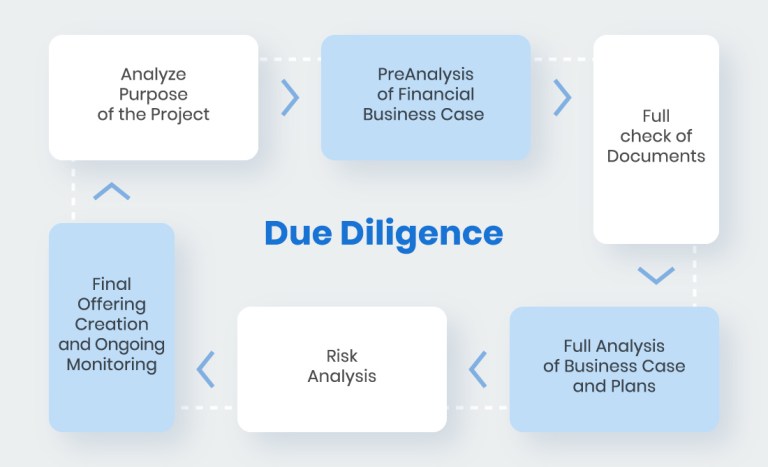
The exception to Section 19, talks about due diligence and if the party has failed to do due diligence before entering into the agreement, the party can’t claim compensation/damages and neither revoke the agreement.
In the matter of Kopparthi Venkataratnam And Anr. vs Palleti Sivaraman And Anr. on 21 November, 1939–
The Madras High court held, “This Court considered the effect of Section 19 of the Contract Act in Morgan v. The Government of Hyderabad, a case very similar to the one now before us. A vendee had deliberately concealed from a purchaser the fact that he had already granted a lease of the property sold, but the buyer if he had been diligent could have ascertained this. The Court held that the case was not within the exception to Section 19 and the absence of exercise of diligence by the plaintiff was not a defence open to the defendant who had concealed the fact of the execution of the lease in order to deceive the plaintiff and had induced him to enter into the contract. This is the position here”.
All India General Insurance Co. … vs S.P. Maheswari on 5 November 1959, the Madras High Court held that “In the case of warranty materiality or immateriality of the fact warranted signifies nothing. Its incorrectness constitutes a defence to an action on the policy, even though it be not material and be made in perfect good faith. But, in the case of a representation, the insurer can avoid the policy only by proving that the statement is false and fraudulent or that it was false and material to the risk. In other words, it is only a material misrepresentation that can avoid a policy if the truth of the facts contained in the representations is not warranted by the policy”.
“This brings us finally to the topics of nondisclosure or misrepresentation which are practically the positive and negative aspects of the same thing. The effect of misrepresentation on the contract is precisely the same as that of non-disclosure; it affords the aggrieved party ground for avoiding the contract”.
In Esso Petroleum v Mardon, Lord Denning MR concluded-“… it was a forecast made by a party, Esso, who had special knowledge and skill. It was the yardstick (the “e a c”) by which they measured the worth of a filling station. They knew the facts. They knew the traffic in the town. They knew the throughput of comparable stations. They had much experience and expertise at their disposal. They were in a much better position than Mr Mardon to make a forecast. It seems to me that if such a person makes a forecast -intending that the other should act on it and he does act on it- it can well be interpreted as a warranty that the forecast is sound and reliable in the sense that they made it with reasonable care and skill…. If the forecast turned out to be an unsound forecast, such as no person of skill or experience should have made, there is a breach of warranty.”
Sample draft of “Representations & Warranties clause”
In order to explain this draft in a better way, the author has taken Google and Motorola as the parties. Through this sample draft, the viewers will get a better understanding of drafting representations & warranties clauses. Since 2011, Google acquired Motorola Mobility, and they must’ve entered into an acquisition agreement in order to ensure that both the parties are legally bound by all the contractual obligations and to secure their investment. The following is a hypothetical draft between Google and Motorola Mobility-
ACQUISITION AGREEMENT
This Acquisition Agreement (“AGREEMENT”) is entered on ________(effective date) at ________(place). By and between:
Google LLC, an American multinational technology company, incorporated under the American laws, with CIN ________, having its headquarters at ____________ and being represented by its Authorised signatory ___________. Hereinafter referred to as the “PURCHASER” (unless repugnant to the context, this expression shall mean and include successors-in-interest/office and assigns) of the First Part;
AND
Motorola Mobility LLC, an American consumer electronics and telecommunications company, with CIN ________, having its headquarters at ____________ and being represented by its Authorised signatory ___________. Hereinafter referred to as the “SELLER” (unless repugnant to the context, this expression shall mean and include successors-in-interest/office and assigns) of the Second Part;
The Purchaser and the Seller shall be collectively referred to as “PARTIES”.
*Here Recitals can be drafted, and after Recitals, you can start drafting all the important clauses of the Agreement*
NOW THIS AGREEMENT WITNESSETH AND IT IS HEREBY MUTUALLY AGREED AND DECLARED BY AND BETWEEN THE PARTIES HERETO AS UNDER:
- Representations and Warranties
The Seller acknowledges, represents and warrants to the Purchaser as follows:
- Seller is a manufacturing/electronic telecommunication company duly organized, validly existing and duly incorporated under American laws.
- The seller has full power and authority to execute and deliver this Agreement hereby and it has been duly authorized and approved by such officers, directors, shareholders, and/or members of the board as required by, and in accordance with the applicable laws.
- The balance sheet and income statement of Seller have been prepared as of _________ and is attached at the end of the Agreement as Schedule 1. The balance sheet fairly presents the financial condition of the seller and reflects all assets, properties, debts and liabilities of the Seller and the income statement fairly presents the results of operations of Seller for the period _________. The seller has no liability as of the date of the balance sheet.
- Seller shall permit the Purchaser and its representatives at all reasonable times during business hours and without interfering with the normal conduct of the business of Seller, to examine and have full access to all of the properties, books and records of Seller and to copy such books and records.
- There is no litigation or proceeding pending against the Seller at any courts, tribunals, commission, regulatory authority, and no controversy is pending or is to the knowledge of the Seller that would affect the right of the Seller to enter into this Agreement.
The Purchaser acknowledges, represents and warrants to the Seller as follows:
- Purchaser is a_________ duly organized, validly existing and in good standing under the laws of America.
- There is no litigation or proceeding pending against the Purchaser at any courts, tribunals, commission, regulatory authority, and no controversy is pending or is to the knowledge of the Purchaser that would affect the right of the Purchaser to enter into this Agreement.
You can amend, modify and add more points under this clause, every agreement will have representations and warranties clause and it shall be drafted as per the parties understanding and the type of agreement, it is better to draft and negotiate the agreement and customising as per the needs of the parties, rather than just copying clauses from the internet or other agreements, in order to minimise the risk of any future dispute.
Conclusion
By now we can’t deny the fact that the representations and warranties clause plays a vital role in every agreement/contract, and how important it is to draft it clearly without leaving any ambiguity. It is also important that how courts have interpreted and defined both representations and warranties differently, hence, these clauses should be drafted by keeping in mind such judgements and foreseeing some disputes beforehand, and also by negotiating between the parties (negotiation is the key) before finalising the draft. Always have a habit of reviewing your drafts over and over, because only a good draft can prevent claims and future disputes. It is important that you draft the agreement as per the needs of your client, and keep his rights protected under the agreement that you draft. It is also recommended that you should draft your clauses and agreement on your own, and not by copying from the templates available online, as each clause in an agreement will have a different meaning, purpose and scope, hence draft according to your client’s needs, and focus on the businesses of the parties involved in the agreement this is because the representations and warranties clause of a Franchise Agreement, shouldn’t be drafted just like or similar to an Intercreditor Agreement.






 Yours truly, LawyerStrange