


Role of Media in Criminology

Guest post by- Ms. Fatima Sufiyaan

The term ‘criminology’ is not used in everyday parlance. As a law student, when the subject was first introduced to us, even I was confused as to what is meant by the term. Therefore, before starting off with the article, let us discuss the term ‘criminology’. 

According to Encyclopedia Britannica, “Criminology is the scientific study of the non legal aspects of crime and delinquency, including it’s causes, correction and prevention.” 

We understand that crime is viewed from a legal perspective; in the sense that a crime is committed through individual actions and the societal response to those actions are punishments. However, while studying criminology, criminologists do not look at the legal perspective; instead, they focus on the broader aspects of crime and criminologists.  

Now that the meaning of Criminology is clear, let us understand the term ‘Mass media’. Generally speaking mass media is technology that is intended to reach mass audience. It is the primary means of communication used to reach the vast majority of the general public.

When we co-relate the two terms, mass media and criminology, we get to understand how the media influences the study of crime and punishment. 

As we already are aware of, that the relationship between the criminal justice system and the media, primarily has been the subject of research, speculation, and commentary throughout the twentieth century. The media always has had a profound effect on how the public perceives and understands the criminal justice system. Aside from the massive interest that the general public has with crime and criminals, people also want to know how those crimes are discovered and dealt with by the system. 

Mass media plays a fundamental role in public policy making and the media coverage of crime news, stories helps to set the agenda and reinforce support for penal policies. 

The greatest example of the same could be news channels and newspapers. People dedicate their time in watching the 9’o clock news to understand what is going on in the world and in the justice system, after which they form feedbacks, which is kept in high regard by the Courts and the Parliament all around the world. Therefore, we can safely say that to a large extent, the media shapes the working of the justice system. 

The media has without second-guessing, an important role as it primarily acts as the ‘eyes’ and ‘ears’ of the public. The relationship between crime and mass media’s insight about it is crucial to formulate the criminal justice system. 

There is a long history of moral panics about the effects of experience to popular media and cultural forms. Stanley Cohen gave the term ‘Moral Panic’. It can be defined as a public mass movement, based on false or exaggerated perceptions or information that exceeds the actual threat the society is facing. It is said, that typically a moral panic is most likely to be perpetrated by the news media. 

There are two perceptions about the moral panics constructed by media; for conservative, the media glamourizes the crime and underestimates public insecurities, whereas for liberals, the media overstates the crime and produces moral panics to justify an authoritarian crime control policy. 

The media defines the public image of police, prosecutors, courts and corrective measures by acting as gatekeepers of crime coverage. The mass media’s capacity to reach vast audiences of citizens and policymakers also positions it as an essential resource for the criminal justice system and all of its attendant judicial and law enforcement organisations. 

For the criminal justice system to operate effectively, it must have the authority that derives from people’s willingness to grant it legitimacy, and media storytelling can profoundly affect this process. 

Bronislaw Malinowski believed that all legal institutions are platforms for controlling illegal affairs, and for venting the feelings of oppression and injustice unleashed against the individuals. Michel Foucault (1979) points out that by the eighteenth century the masses could sympathise with the accused and ‘the people never felt closer to those who paid the penalty than in those rituals intended to show the horror of the crime and the invincibility of power exercised without moderation or restraint.’

However, there are certain downsides as well, when it comes to mass media’s role in criminal justice system. 

Agenda-setting theory (Maxwell McCombs and Donald L. Shaw) is concerned with how the media constructs depictions the world and in turn how this influences the people in looking at the world.

Mainstream media draws attention to certain aspects of politics at the expense of other issues by reporting news about one issue, while ignoring other issues. The legitimacy of governance depends on the consensus of rulers, and it is generally believed that policy makers should not assume policies outside the boundaries they provide. Therefore, public opinion is a legitimate consideration for policy makers when making decisions. 

In his book Crime, Culture and the Media, Eamonn Carrabine states that reporting crime 24/7 contributes to the cultural climate of horror. Media representation can adversely affect the perception of crime-related topics and impair the implementation of security measures. 

Danilo Y (2001) states: “The depiction of violent crime by the media deepens our understanding of crime and justice and is reflected in public policy.” 

According to Hayward and Young (2007), the media and the general public are always obsessed with crime and criminals. Crime news coverage has created an ambitious audience and has been a consistent theme of popular culture throughout the 20th century.

Further development of public policy begins with the recognition that problems exist. The pre-political stages are: topic formation, political demands and agenda formation. The media increases newspaper sales by entertaining people about crime, but ultimately distorts the public’s understanding of crime as a serious social problem. According to Leishman P. and Mason P. (2002), news media, like the entertainment industry, targets criminal articles, as does reality television and other forms of infotainment.

Crime stories and illustrations are an important part of all mass media content.

Media acts as an investigation, such as a pretrial investigation by state law enforcement agencies. It reveals political corruption, fraud, and many criminal cases in society. Therefore, although it is an important source of information, it serves as a source of information and thus supports the national criminal justice system. This is possible because the press is not subject to prior restrictions, but ultimately civil and criminal liability for the disclosure of information and news of false, profane, obscene, or inciting in nature, might be asked.

In India, there are many cases in which law enforcement authorities have been violently awakened from sleep and further urged to take action against the accused. In the Shakti Mills Gang Rape case, a photojournalist was gangraped by five men at Shakti Mills in Mumbai. In this case, timely media intervention facilitated the criminal procedure and urged another 18-year-old switchboard operator to report being raped at the same location in July 2013 in accordance with 2013 law. In this case, the media undoubtedly played an important role in promoting the criminal justice system.

In State v. Ram Singh and Another (SC No 114/2013), also known as the Nirbhaya Incident, on December 16, 2012, five men and a young man raped an emergency medical student on a moving bus, then cruelly attacked her and caused her severe injuries. The Indian media reported extensively daily on the incident, which shook the country’s collective consciousness due to the complete fall of crime. The media reported the incident immediately and helped generate strong public opinion. Thorough follow-up did not subside or extinguish the awakening of the masses. On September 13, 2013, the court sentenced the defendant to death. On March 13, 2014, the Supreme Court upheld the death penalty.

In conclusion, media activists are the most welcome attitude, the calm attitude between the two extreme situations of media exaggeration and media lethargy.

But such activism should be countered by a bit of restraint so that the danger of developing into a media tyranny cannot be ruled out. The media is the fourth pillar of a democratic nation. When public opinion is the lifeline of a country, the press is the body and means to carry it, nurture it, preserve it, and give it a concrete and concrete form. Criminal investigations and court proceedings relate to the issue of freedom of life and dignity. Criminal consequences can have serious consequences for people’s minds and bodies. The work of the media and the media must not undermine or deviate from the notions of life, freedom and dignity of an individual. If innocent people are convicted and punished, it’s certainly a shame, not because of what they did, but because of misery and media fantasies. A person will not be punished for a crime in India unless it is proved beyond reasonable doubt. But if a person is punished for media interference, but there is a suspicion that the person may be innocent, in the case of media interference, the real sinner is the media. Media ethics must be recognized, learned and practiced by the media in order to maintain the most trusted social system in the democratic world.

References:

  1. https://study.com/academy/lesson/what-is-mass-media-definition-types-influence-examples.html
  2. tandfonline.com/doi/abs/10.1080/1478601X.1993.10383020
  3. https://www.simplypsychology.org/folk-devils-and-moral-panics-cohen-1972.html#:~:text=Moral%20panic%20is%20defined%20as,values%2C%20interests%2C%20and%20safety.
  4. https://halshs.archives-ouvertes.fr/halshs-00178422/document
  5. https://www.encyclopedia.com/law/legal-and-political-magazines/mass-media-and-crime
  6. https://en.wikipedia.org/wiki/Agenda-setting_theory
  7. https://www.communicationtheory.org/agenda-setting-theory/
  8. https://lawaspect.com/role-media-criminal-justice-system/
  9. https://www.csirs.org.in/uploads/paper_pdf/role-of-media-in-the-indian-justice-system-with-special-reference.pdf
  10. https://courseware.cutm.ac.in/wp-content/uploads/2020/06/Role-of-Media-in-Criminology.pdf
All you need to know about a broadcasting agreement

First published on Ipleaders

Introduction 

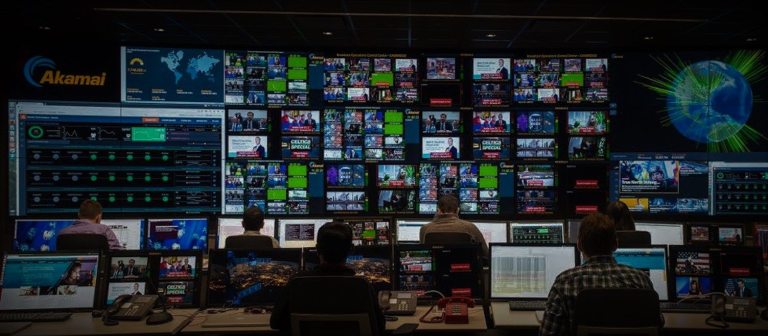
Broadcasting is a process wherein an art, a performance, or an event that has either been recorded or which is currently being recorded gets telecasted to a large and wide audience worldwide through TV signals, radio signals or through the Internet.

We are living in a digital world, where everything has been digitalised, in fact one of the major reasons is Covid-19, the entire world has completely shifted to virtual zone either for work-related purposes or for entertainment purpose.

Have you ever wondered, when you watch a live event, let’s say a Live Cricket match or Live Wrestling, even though you haven’t purchased the tickets for the event, but you’re still able to watch the same event at your comfort in your pyjamas, and still the Sports and Entertainment Industry manages to earn in Millions and sometimes in Billions! But how? Is broadcasting that expensive and easy money-making for these Industries?

In this article, we will discuss everything related to a broadcasting contract in great detail.

What is a broadcasting agreement?

A broadcasting agreement is an agreement entered by two or more parties for the telecast/broadcast of the specified event as mentioned in the agreement to reach maximum or a wide audience through different modes of telecast either through live streaming, through TV signals, subscription-based broadcast, and/or via internet signals, or radio signals.

A broadcasting agreement is entered between the event’s host or the content creator or the producer of the event (“Creator”) with the broadcasting agency(s) (“Broadcaster”). The Broadcaster has to telecast the event on the platform(s) as mutually agreed by the Creator and the Broadcaster (“Parties”). The Creator of the event grants a license to the Broadcaster to either have the exclusive rights relating to the broadcasting of the event or non-exclusive rights, as per the said agreement. 

The term “broadcast” has been defined under Section 2(dd) of the Copyright Act, 1957 as, communication to the public either via wired or wireless medium and also includes re-broadcast.

In a broadcasting agreement, the Content Creator/the performer or the producer is the sole owner of the rights relating to the Intellectual Property, as it is the Creator’s original work, hence it is his property, moreover a broadcasting agreement doesn’t mean to transfer the ownership of the Intellectual Property from the Content Creator to the Broadcaster. It merely gives the Broadcaster the license to distribute the said content/performance/event with the public at large through its network.

Importance of such agreements

To understand the concept of a broadcasting agreement, we need to first clarify two basic prerequisites, i.e., Why are these agreements/contracts made? And secondly, why broadcasting is important for this day and age?

As we know, through agreements, parties are bound by rights and duties as mutually agreed by them. To fulfil any purpose, an agreement gives the said purpose legal importance and makes it enforceable at the court of law, if in case an event of default occurs. To secure and protect oneself from fraud, it is very important to enter into an agreement before accepting any commercial or non-commercial deal.

Coming to the second part, as to why broadcasting is an important service is because it is considered to be a public service, and public service is for the greater good, which is considered to be a moral obligation of both the State as well as of an individual, or associations/corporates, etc. Most importantly, through the broadcasting services huge amount of income is generated within the economy as through broadcasting an event, the scope of viewership and audience gets enlarged, which is good for both the sport, the players as well as for the nation as a whole as it gives recognition to both the nation as well as the players get recognized for their efforts. 

A huge amount of income is generated through broadcasting, lets take few examples, the FIFA World Cup, ICC World Cup, IPL, WWE, UFC, Davis Cup, The U.S Open, etc are some of the sports wherein the broadcasting rights are sold in Millions of Dollars. If we take examples of Movies or TV series instead of sports, in 2015 Netflix acquired the streaming rights of Friends for $100M.

Now if parties are willing to spend a hefty amount of money for acquiring streaming or broadcasting rights, it will be prudent enough to secure the said transaction by entering into an agreement. Hence, the broadcasting agreement is not only a vital part of the transaction but it binds the concerned parties together and makes them legally bound to all the obligations mentioned as per the agreement.

Important clauses and provisions of the agreement

In a broadcasting agreement, few operative clauses are mandatory to be drafted and they are-

  1. Purpose clause- A purpose clause is drafted to mention the purpose behind the said agreement. The parties have to rightfully mention the exact purpose of the agreement, and the purpose shall not be illegal, otherwise the entire agreement would become void.
  2. License clause- In this clause, it is to be mentioned that the Creator/Producer or the owner is granting a license to the broadcaster to stream/telecast either live or recorded session of the event on its network(s) and platform(s). Whether the agreement is an exclusive broadcasting agreement or not, shall also be mentioned here. Everything relating to the broadcasting license shall be mentioned in this clause. 
  3. Habendum clause- In this clause, all the rights relating to the property (Intellectual property, in this case) shall be mentioned, if in future there is any confusion relating to the title and ownership of the Intellectual property, then this clause can be a life-saver.
  4. Representations and Warranties- In this clause, both the parties shall state the fact and shall comply with the such represented fact individually, so that in case if anything happens contrary to the said and accepted facts, then the parties shall be responsible individually. 
  5. Rights and Obligations clause- In this clause, all the rights and obligations of both parties shall be mentioned clearly.
  6. Dispute resolution clause- This clause is very crucial, and needs to be drafted with clarity, as this clause will determine how the parties shall deal with the future disputes that might happen between them. Parties can mention, “Parties hereby mutually agree that all the disputes arising out of this agreement shall be referred to arbitration”, something like this can be mentioned, also if the parties are referring to arbitration as the mode, then the seat, venue, governing law, number of arbitrators, whether opted for ad-hoc or institutional arbitration, these shall be mentioned and covered in the clause.
  7. Tenure clause- In this clause, the tenure of the entire agreement shall be correctly mentioned, so that no future conflict or dispute arises concerning the tenure of the agreement.
  8. Force Majeure clause- In case of any unforeseeable circumstance, if any of the parties or party is unable to fulfil its contractual obligation, then such defaults or event of defaults shall not lead to termination of the agreement.
  9. Promotions and Sponsorships clause- In this clause, the parties shall mention, whether any sponsors for the event and the ways of promotions of the event, shall be mentioned clearly.
  10. Event of Default clause- In this clause, all the events that lead to default of the obligations as promised by the parties as per the agreement shall be mentioned. At last, such events shall directly lead to the termination of the agreement.
  11. Termination clause- In this clause, the modes and ways of termination of the agreement shall be mentioned, and anything apart from the modes or ways of termination mentioned in the agreement shall not be considered as termination. All the event of default shall directly result in termination of the agreement, hence the “Event of default clause” shall go hand in hand with this clause.
  12. Payment and Fees clause- In this clause, the modes of payment and the entire fees charged or to be paid by the broadcaster to the Producer shall be mentioned. 

Any law governing the agreement?

A broadcasting agreement shall be governed by multiple laws depending on the place of operation of the said agreement. The laws that shall be governing a broadcasting agreement are-

  1. Intellectual Property law
  2. Contract law
  3. Arbitration
  4. Antitrust/Competition law

Implications of not getting into an agreement

If the parties have no written agreement/contract stating that they have successfully entered into a broadcasting agreement, then the same shall not be enforceable as well as it might get very tough to prove whether there was any agreement between the parties or not. In such situations, where parties act negligently and where the consideration is of hefty sum, there is always a high chance of fraud. To secure oneself and the agreement, it is imperative to have a record of the same in a written format, with the signatures of both parties.

An important thing to be noted down here is that, when parties agree to enter into an agreement, the reason why the lawyers or the contract draftsmen drafts a dispute resolution clause, is because although initially at the time of the agreement, the parties mutually agree to each other’s terms but are unable anticipate any future dispute, and a dispute is something which can never be eliminated, the difference of opinions, etc can’t be foreseen, hence, it is important to have a dispute clause, to protect the rights of about the parties, but if there is no written agreement, the complainant shall have to prove at first that there was an agreement between the parties and when the court of law is satisfied with the fact that there was an agreement, then only the court shall consider the latter allegations.

Hence, having a written agreement is a win-win situation to protect the rights of the parties against any mishap or fraud.

Case laws relating to broadcasting agreements

  1.  Neo Sports Broadcast Pvt Ltd v. New Sanjay Cable Network & Ors-

In this matter, the plaintiff entered into a broadcasting agreement with BCCI. Since BCCI granted a license to the plaintiff to broadcast test cricket matches between India and other countries, the plaintiff found out that the defendants without any authorization or license from the owner or the plaintiff were transmitting and making available the channel to their clients and the Hon’ble Delhi High Court held that, unauthorized transmission of the TV channel to a selected clientele also leads to commercial use of broadcast and leads to making available the content to the public. Hence, violates the broadcasting rights or broadcast reproduction rights of the plaintiff.

  1.  Star Sports India Private Limited vs. Prasar Bharati and Ors-

The Hon’ble Supreme Court of India held in this judgement, that the broadcasting rights of all the sports event that are of national importance must be shared with Prasar Bharti, free of all commercial interest. So, that the entire country can witness the importance of the game, and get inspired by the same, the core element of this judgement was public interest, and where the court is satisfied with the fact, that an issue is directly proportional to the public interest, then the court shall always favour and pass an order or judgement protecting the public interest at large. Hence, in this case, even though the broadcaster entered into a broadcasting agreement, still his rights weren’t protected, since, it was a matter of the public at large.

Conclusion 

By now, you must have understood the entire concept of a broadcasting agreement, and why parties do enter into such agreements; its importance and the implications, if there is no such agreement between the concerned parties. The basic idea behind an agreement is to mention everything at once during the initial phase of negotiations or at the time of drafting. When parties enter into an agreement, then they mutually agree to all the terms and conditions of the said agreement. It is the best way to secure a deal and transaction, especially if the transaction involves huge amount of money.